
Product Development & Design Consulting
Simulation-Driven Product Development and Design Consulting
In today’s fast-moving industrial world, companies need efficient and intelligent design processes to stay competitive. From lowering production costs to accelerating innovation, advanced engineering and simulation tools are at the heart of modern, simulation-driven product development.
Our Product Development Consultants and Product Design Consultants combine CFD simulation expertise with CAD services and 3D modeling to help clients create smarter, more reliable products—turning complex challenges into optimized, cost-effective design solutions that enhance performance and reduce risk.
On this page: What we do · Why simulation · Applications · Virtual prototyping · Process · FAQ
What Is Simulation-Driven Product Development?
Simulation-driven product development uses CAD modeling, CFD simulation, and mechanical analysis to test and refine a design digitally before it is built. Instead of relying on repeated trial-and-error prototypes, engineers see how fluid flow, heat transfer, and structural loads affect the product—and change the design where it matters.
By leveraging our expertise in engineering simulation, innovative design, and equipment design, CFD Vision helps companies, laboratories, and research teams turn complex challenges into reliable, efficient, and cost-effective solutions.
What we combine
- CAD services and 3D modeling
- CFD simulation and analysis
- Thermal and mechanical analysis (FEA)
- Virtual prototyping and design comparison
- Equipment and experimental facility design
Why Simulation is Essential in Modern Product Development
Traditional trial-and-error approaches to product development can be time-consuming, expensive, and prone to errors. With CFD simulation, thermal analysis, and mechanical modeling, designers can visualize and test fluid flow, heat transfer, and structural behavior before any physical prototype is built. Key benefits of simulation in product design services and engineering development include:
01
Reduced prototyping costs
Screen design options digitally so fewer physical prototypes are needed.
02
Shorter development cycles
Faster design iterations, with each change evaluated before manufacturing.
03
Improved performance and safety
Identify weak points in flow, cooling, or structure before they reach the customer.
04
Accurate behavior predictions
Predict fluid, thermal, and mechanical behavior under realistic operating conditions.
05
Informed design decisions
Compare design iterations with consistent engineering data, not guesswork.
Need a detailed flow or thermal study of an existing system?
Where We Apply Simulation-Driven Design
From laboratory facilities to industrial equipment, our product design consultants apply the same principle: understand the physics first, then design around it.
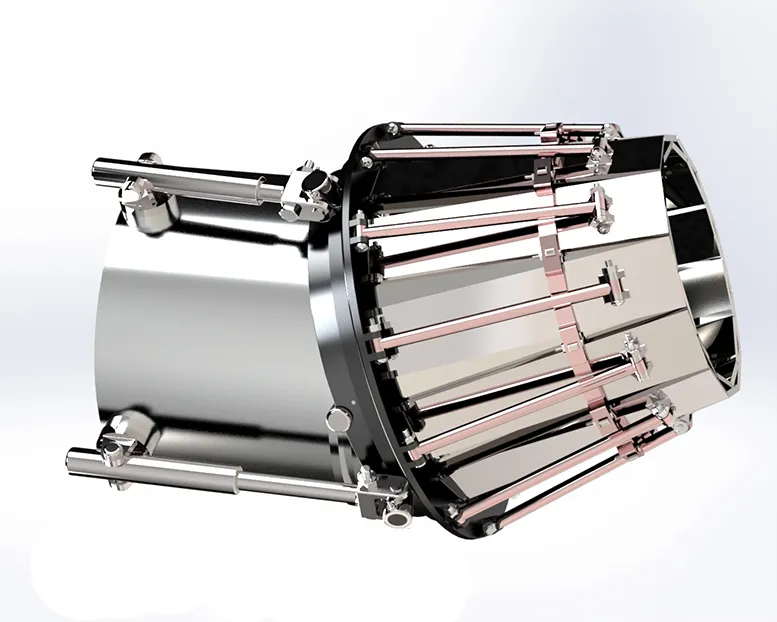
Designing Experimental Facilities with CFD Insights
Laboratories, universities, and research institutions often need wind tunnels, heat transfer rigs, and fluid flow test benches. For a small-scale wind tunnel used in aerodynamic testing, CFD predicts turbulence, velocity profiles, and pressure distribution so duct geometry and fan placement can be refined before building.
For heat transfer rigs and flow benches, modeling thermal gradients and flow patterns helps optimize sensor placement, ensure uniform heating or cooling, and improve measurement reliability.
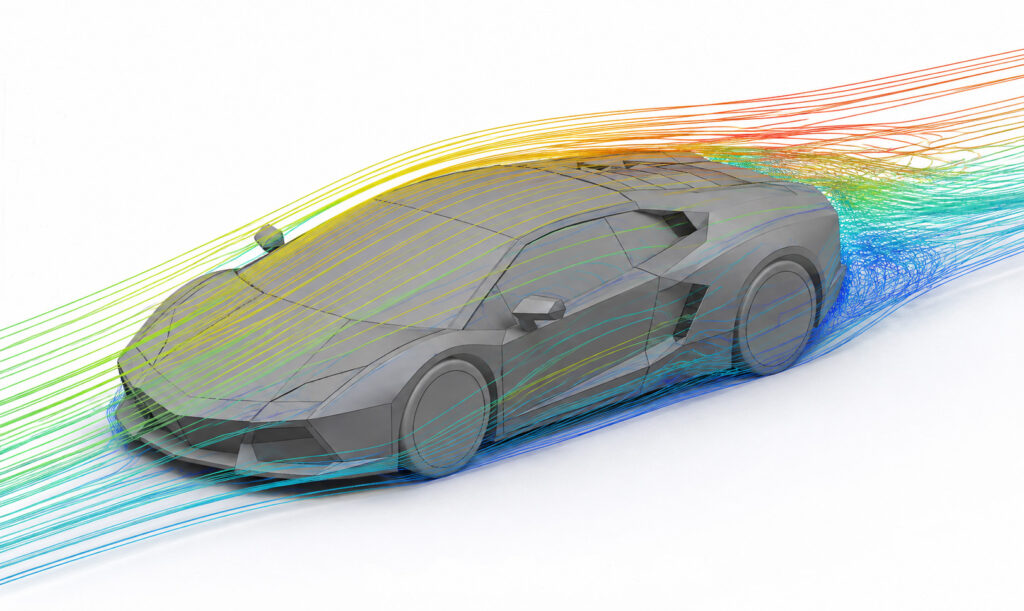
Optimizing Industrial Products for Performance and Efficiency
In HVAC, electronics, and pumps, product design directly impacts efficiency, reliability, and energy consumption. Simulating airflow and temperature in duct networks reveals bottlenecks and improves fan operation; in electronics, simulation predicts hotspots and guides component placement for better thermal management.
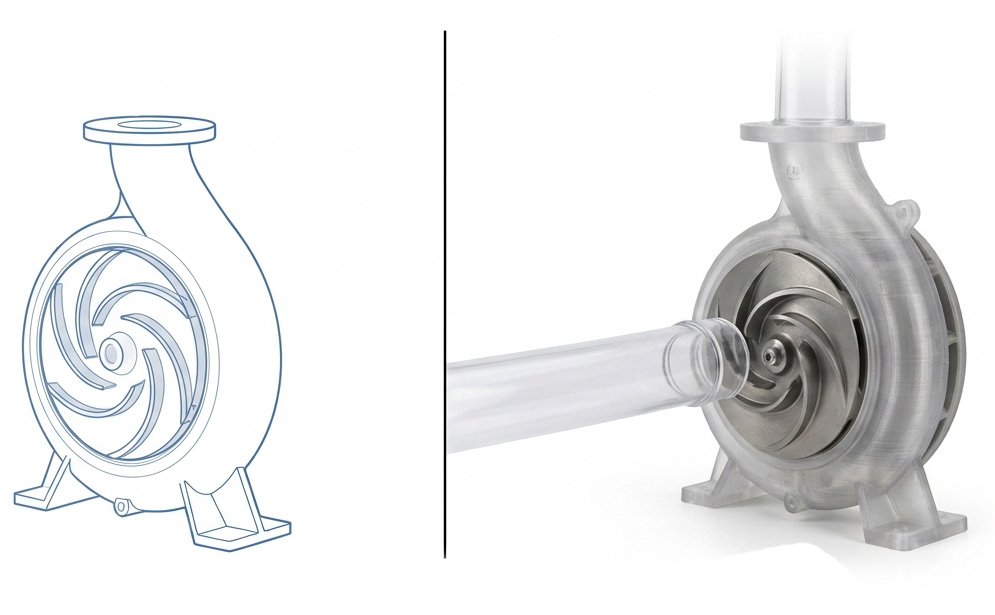
In pumps and heat exchangers, engineering simulation helps optimize impeller designs, reduce cavitation risk, and improve heat transfer efficiency.
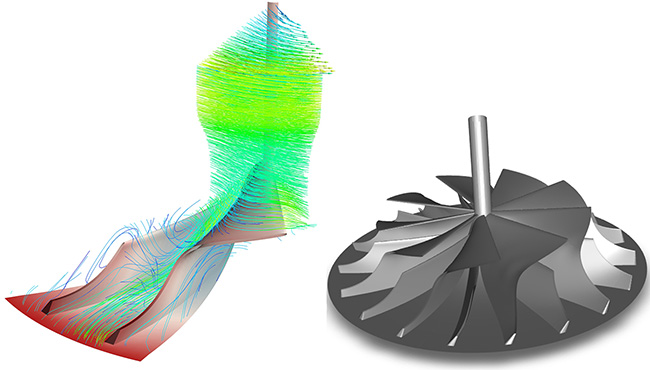
Strengthening Mechanical Design with Advanced Simulation
Components must withstand high stresses, fluctuating loads, and complex operating environments. Our product development consultants use engineering simulation to evaluate structural integrity, fatigue life, and thermal-mechanical interactions—for example in turbines, compressors, and pumps.
By integrating CFD simulation with finite element analysis (FEA), we give a complete picture of real-world behavior—balancing performance, weight, and reliability while reducing material waste.
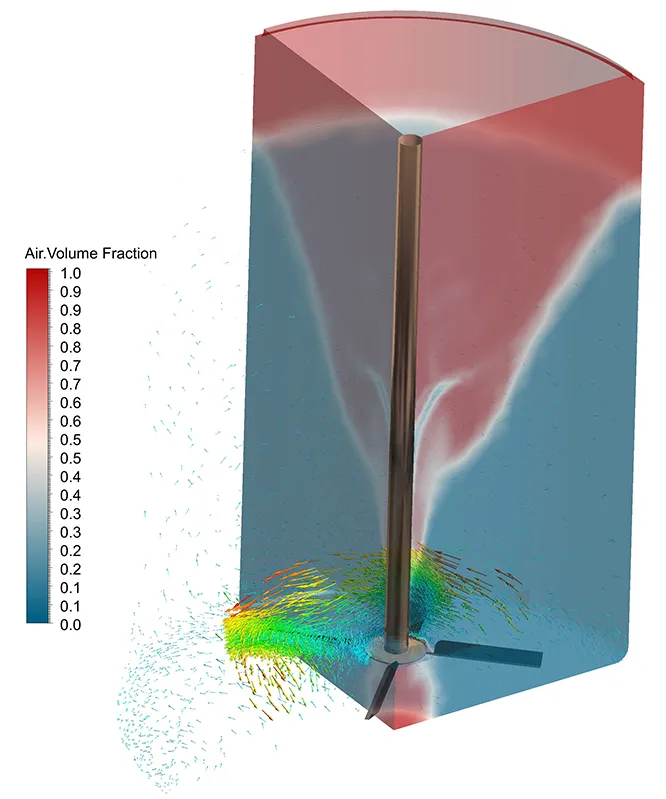
Improving Fluid Flow and Heat Transfer in Academic and Industrial Equipment Design
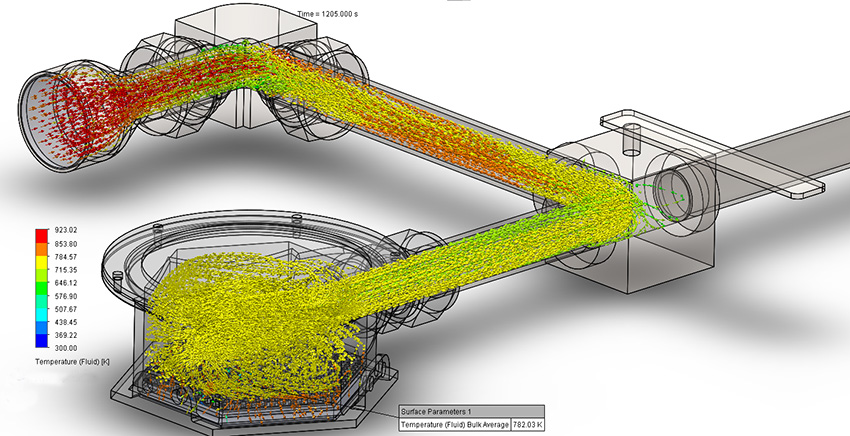
From chemical reactors to pipelines, equipment design directly affects operational efficiency. Simulating a reactor reveals dead zones and improves mixing; pipeline simulations help prevent excessive pressure drop, cavitation, and uneven flow distribution.
Small-scale machinery such as pumps and heat exchangers also benefits from design optimization, improving durability and energy savings.
Virtual Prototyping for Cost-Effective Product Innovation
Virtual prototyping is a cornerstone of modern product innovation consulting. Our engineers use CAD modeling and simulation-based digital models to evaluate mechanical components, consumer products, or energy systems before production.
Whether optimizing cooling channels in an automotive brake system or improving fluid flow in small appliances, CFD simulation services reduce design uncertainty and prevent costly production issues—turning creative ideas into manufacturable products faster.
Read: CFD in product development, from concept to simulation-driven design →
How Our Simulation-Driven Product Development Process Works
Every project is different, but the workflow follows the same logic: define what the product must achieve, then use CAD and simulation to reach it with fewer physical iterations.
01
Define the requirements
Performance targets, operating conditions, constraints, and the design questions that matter most.
02
Concept and CAD modeling
Design concepts are developed or refined as 3D CAD models ready for engineering simulation.
03
Simulate and compare
CFD, thermal, and mechanical analysis evaluate each option under realistic conditions.
04
Refine and recommend
The strongest design is refined and documented, ready to support prototyping and testing.
Real-World Benefits of Partnering with CFD Vision
Collaborating with CFD Vision gives companies access to multi-disciplinary expertise in CFD, product design services, and industrial design consulting—so engineers and decision-makers have the insight they need to avoid costly mistakes and reach market-ready designs faster.
- Accelerate product development through faster design iterations
- Reduce costs with virtual prototyping and predictive simulations
- Achieve reliable, data-driven equipment design
- Innovate confidently with scientifically validated predictions
- Enhance performance, safety, and efficiency across all systems
Related Design and Optimization Projects
Examples of simulation supporting design improvement:
Need a research-grade model of your own? See our CFD Teaching and Ansys Fluent Training, or browse all CFD simulation projects.
Product Development FAQ
Common questions about simulation-driven product design and development consulting.
What does a product development consultant do?
A product development consultant helps turn a product idea or an existing design into a better-performing, manufacturable product. At CFD Vision, that means combining CAD modeling with CFD, thermal, and mechanical simulation to evaluate and refine designs before physical prototypes are built.
Can simulation replace physical prototypes?
Not entirely. Virtual prototyping reduces the number of physical prototypes by screening design options digitally, so testing can focus on the most promising design.
Do you provide CAD services and 3D modeling?
Yes. CAD services and 3D modeling are part of our product design services, so geometry can be developed or adapted directly for simulation and design iteration.
What types of products and equipment do you work on?
Experimental facilities such as wind tunnels and heat transfer rigs, HVAC and electronics cooling products, pumps, compressors and rotating machinery, heat exchangers, reactors, pipelines, and other industrial equipment.
What do I need to start a product development project?
A description of the product and what it must achieve, plus any existing CAD files, drawings, operating conditions, or test data. If some information is missing, we can help define it during the first discussion.
Take Your Design to the Next Level
Are you maximizing your design potential? How much better could your products perform if every design decision were supported by precise CFD simulation, CAD modeling, and product development consulting?
Whether you are improving laboratory facilities, industrial products, or additive manufacturing processes, our Australian-based CFD and product design consultants provide the insight and reliability you need.