
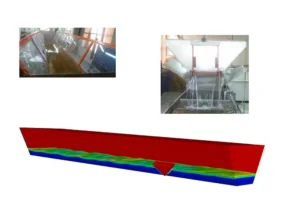
CFD analysis of an open channel with a triangular (V-notch) weir supported the design of a hydraulic research facility, confirming the head–discharge behaviour and the flow conditions needed for reliable measurements.
Sector
Hydraulic research
Client
University hydraulics laboratory
Flow type
Free-surface, turbulent open-channel flow
Project Snapshot
Challenge
A triangular weir is only an accurate flow-measuring device when the approach flow is calm and uniform, the nappe springs clear of the plate, and the downstream water level does not submerge the notch. The facility layout had to meet these conditions across the planned flow range before it was built.
Approach
A VOF free-surface CFD model of the channel and weir resolved the air–water interface, the approach flow and the falling nappe. Upstream head was evaluated at several flow rates and compared with standard V-notch weir relationships to confirm the measurement behaviour of the facility.
Key Findings
- Predicted upstream head followed the expected V-notch head–discharge trend, supporting the use of the weir for flow measurement in the facility.
- Surface drawdown began well upstream of the crest, which defined the minimum distance for placing the water-level measurement point.
- The nappe impact created a recirculating plunge zone downstream, so the downstream channel length and tailwater level needed to keep the notch free-flowing at high flow rates.
Deliverables
Free-surface profiles, velocity fields, head–discharge predictions and layout recommendations for the hydraulic experimental facility.
Working on a similar problem?
Explore our CFD consulting services and engineering simulation services, or send us your open-channel or hydraulic-research question.