
SYDNEY-BASED · SERVING CLIENTS ACROSS AUSTRALIA
CFD Consulting in Australia
CFD Vision provides PhD-led CFD consulting in Australia for engineering consultancies, manufacturers, asset owners and research teams. Our CFD consultants in Sydney model airflow, heat transfer, water flow and multiphase behaviour for projects in Sydney, Melbourne, Brisbane, Perth, Adelaide and regional Australia, then turn the results into engineering decisions you can defend to a client, a certifier or a board.
What Does a CFD Consultant Do?
A CFD consultant uses computational fluid dynamics to simulate how air, water, gases and heat move through a design, then interprets the results to answer a specific engineering question. In Australia, computational fluid dynamics consulting is most often used to check ventilation and cooling performance, diagnose problems in pumps, sumps and process equipment, assess wind around buildings, and compare design options before anything is built or modified.
CFD Consulting Australia at a Glance
- Location: Sydney, NSW, delivering CFD consulting Australia-wide, with models, results and reports shared online.
- Expertise: PhD-led computational fluid dynamics with more than 10 years of applied CFD in industry and research.
- Typical work: ventilation and thermal comfort, data centre and electronics cooling, pumps and hydraulic systems, slurry and process equipment, wind around buildings, heat exchangers and simulation-led product development.
- Working hours: Australian Eastern Time, in the same business day as your project team.
- What you receive: an engineering report covering the question, assumptions, model set-up, verification evidence, results and recommendations.
- Getting started: send the geometry and the question you need answered. We respond within 2 business days.
Why Work With CFD Consultants Based in Sydney
CFD rarely fails because of the solver. It fails when the model answers a different question from the one the project needed, or when the design team and the analyst never talk in real time. Working with a computational fluid dynamics consultant in Australia removes most of that friction.
Same Time Zone, Faster Iterations
Design reviews, boundary-condition questions and result walk-throughs happen within your working day. A change requested in the morning can be discussed the same afternoon, not after an overnight handover.
Framed Around Australian Requirements
Many Australian projects are judged against criteria such as AS 1668.2 ventilation, AS/NZS 3500 plumbing and NCC Performance Solutions. Each study is set up so its outputs speak directly to the criteria your design must meet.
Direct Access to the Engineer
You speak with the person who builds the mesh, chooses the physics and checks the results. Technical questions get technical answers, without an account manager in between.
Computational Fluid Dynamics Consulting for Australian Industries
Our CFD modelling work follows the industries that shape the Australian economy: building services, digital infrastructure, water, resources, energy and manufacturing. These are the areas where we most often support Australian clients. The full range is listed on our CFD analysis services page.
Building Services and HVAC
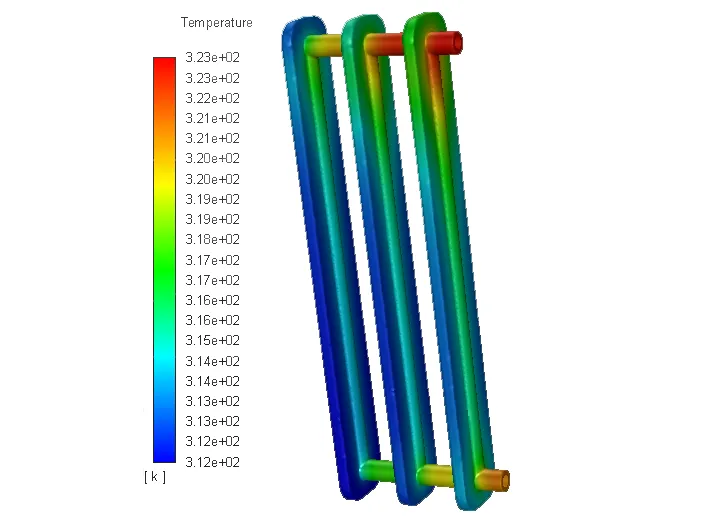
Ventilation effectiveness, car park exhaust, plant room airflow, indoor air quality and occupant thermal comfort, including cases where simple calculations cannot show how air actually moves through a space. See a thermal comfort project.
Data Centres and Electronics Cooling
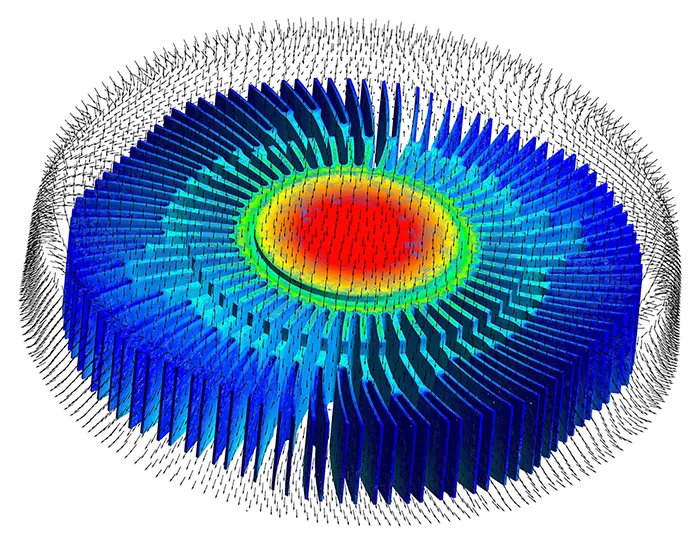
Hot and cold aisle performance, recirculation, server room airflow, enclosure cooling and heatsink design, so thermal risks are found in the model rather than during commissioning. See a heatsink cooling project.
Water and Wastewater
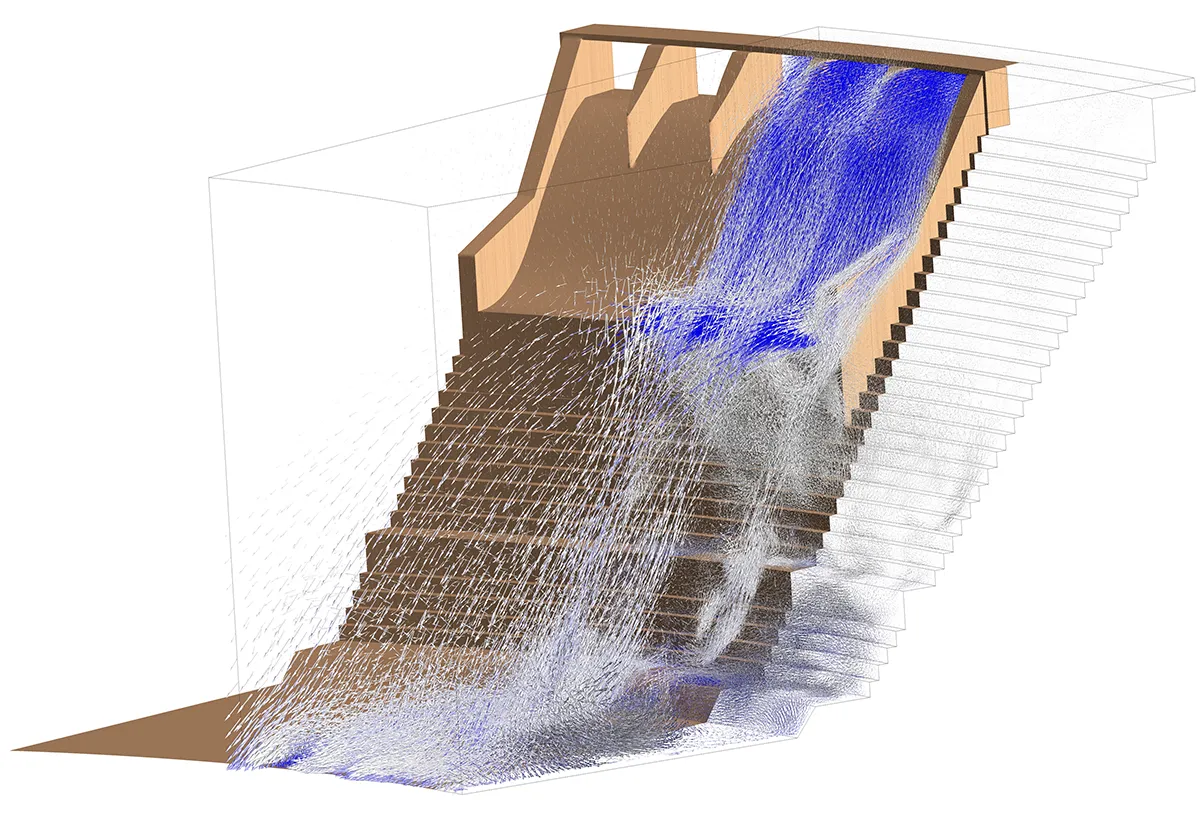
Reservoir circulation, open channels and weirs, pump sumps, pipelines and treatment structures, where flow patterns drive water quality, energy use and asset life. See a reservoir project.
Mining and Mineral Processing
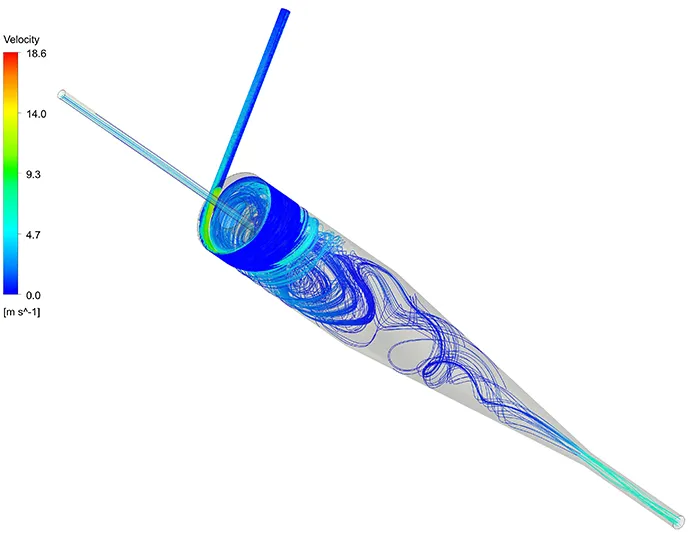
Slurry pumps, cavitation, hydrocyclones, mixing tanks and particle-laden flows: the equipment where wear, blockage and efficiency losses cost Australian operations the most. See a slurry pump project.
Wind and the Built Environment
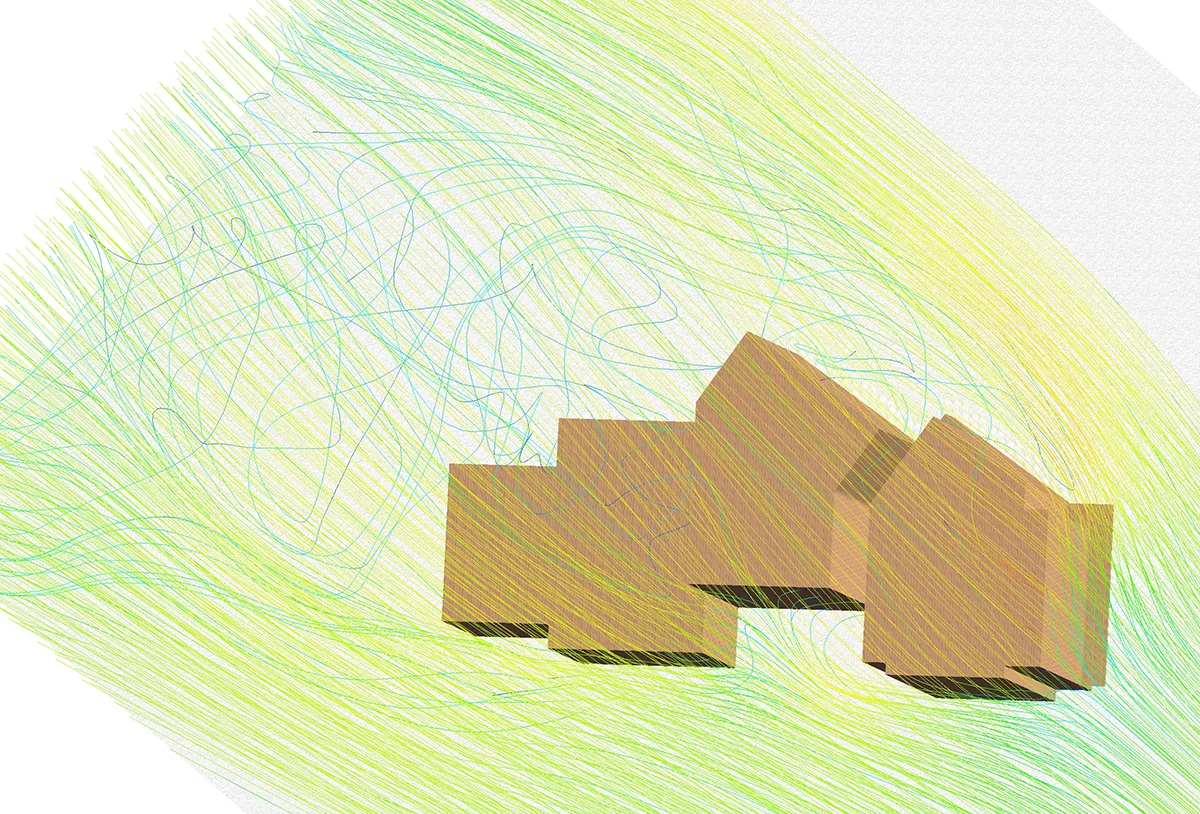
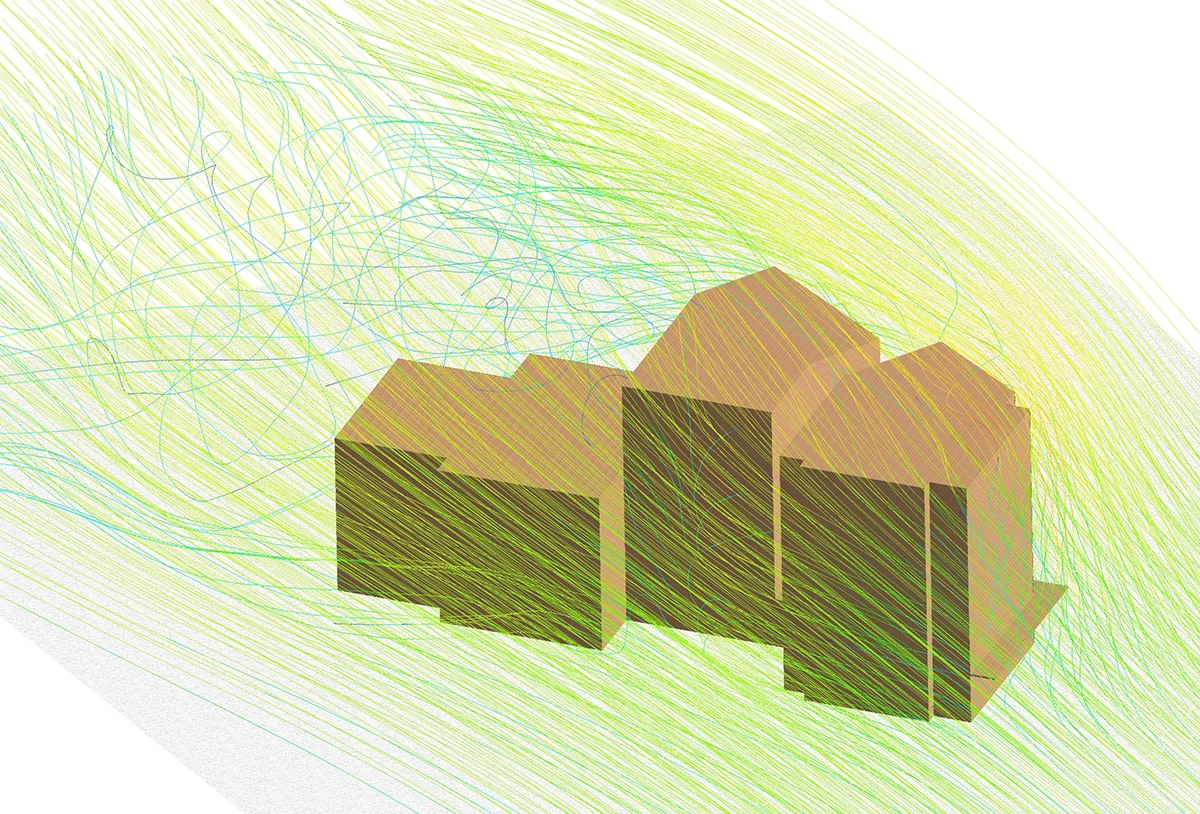
Pedestrian wind comfort, channelling between towers, wind loading trends and natural ventilation concepts for urban developments and building designs. See a wind flow project.
Energy, Manufacturing and Product Design
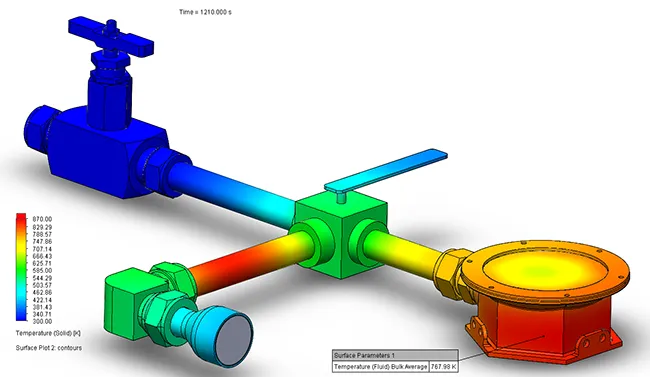
Heat exchangers, fans, compressors, thermal energy storage and new products, where simulation reduces prototype rounds and supports simulation-driven product development.
Questions CFD Answers on Australian Projects
| Sector | Typical engineering question | What the CFD study provides |
|---|---|---|
| Building services | Does the ventilation design clear contaminants and heat from every occupied zone, not just on average? | Air velocity, age-of-air, temperature and concentration maps, with any dead zones identified |
| Data centres | Will the cooling layout hold rack inlet temperatures at full load and under failure scenarios? | Rack inlet temperatures, recirculation paths and the impact of each layout option |
| Water infrastructure | Why is a sump, channel or reservoir showing vortices, short-circuiting or poor mixing? | Flow patterns, residence time and the effect of design modifications before construction |
| Mining and processing | Where are pumps, cyclones or tanks losing efficiency or wearing prematurely? | Velocity, pressure, cavitation and particle behaviour linked to wear and performance |
| Urban development | Will a proposed building create uncomfortable or unsafe wind at street level? | Wind speed-up zones and a comparison of mitigation options |
| Product development | Which design variant performs best before tooling or prototyping? | Ranked design options with pressure drop, flow and thermal performance |
Specialist CFD Support for Australian Engineering Firms
Many Australian building services, fire, civil, process and mechanical consultancies need CFD only a few times a year, often at short notice and under a tight programme. Keeping a full-time analyst for that workload rarely makes sense. CFD Vision works as your specialist CFD capacity:
- We work alongside your engineer of record. Your team keeps design responsibility and the client relationship.
- Studies are scoped around the criteria in your brief, so results can go straight into your design report or submission.
- Assumptions, mesh and verification evidence are documented for internal review and third-party scrutiny.
- Confidentiality is standard, and a non-disclosure agreement can be signed before any files are shared.
How a CFD Consulting Project Works
- Define the decision. We agree what the study must answer and which result would actually change the design, before any geometry is meshed.
- Collect the inputs. CAD geometry, operating conditions, fluid properties and any measured data. Gaps are resolved together during scoping.
- Build and verify the model. Physics models are selected for the problem, and mesh sensitivity is checked using methods such as the Grid Convergence Index.
- Validate where evidence exists. Results are compared with site measurements, test data, analytical solutions or published correlations.
- Report and recommend. You receive the findings, their engineering interpretation and a clear recommendation on what to change.
CFD Consultants for Sydney, Melbourne and Nationwide Projects
CFD Vision is based in Sydney and works with clients across New South Wales and interstate. Because CFD is delivered digitally, a project for a team looking for CFD consultants in Melbourne, Brisbane, Perth or Adelaide runs the same way as one in Sydney: shared files, scheduled reviews and the same engineer from scoping to final report. You get computational fluid dynamics consultants in your own time zone without paying for a local office. We also support clients in New Zealand and overseas.
Every project is led by a PhD-qualified CFD specialist with more than a decade of applied thermal-fluid experience. Read more about CFD Vision and the team.
CFD Consulting in Australia: Frequently Asked Questions
Do you only work with clients in Sydney?
No. CFD Vision is based in Sydney but delivers CFD consulting across Australia, including Melbourne, Brisbane, Perth, Adelaide and regional areas. Projects run online with scheduled review calls, so location does not affect quality or turnaround.
Do you provide CFD consulting in Melbourne?
Yes. Melbourne clients work with our Sydney-based CFD consultants in the same time zone, with files shared online and review meetings held by video call. On-site visits can be arranged when a project needs them.
How much does CFD consulting cost in Australia?
Each project is quoted after a short scoping review. Cost depends mainly on geometry complexity, the physics involved (turbulence, heat transfer, multiphase or rotating flow), the number of design cases and the level of validation and reporting required. A well-defined question is the most effective way to keep a study focused and affordable.
Can CFD support NCC Performance Solutions or development applications?
Yes. CFD can provide technical evidence on airflow, ventilation, thermal conditions and wind behaviour where prescriptive methods are not enough. We work alongside the project’s building services, fire or design engineer, who remains responsible for the overall solution and its compliance pathway.
What information do you need to start a CFD study?
Usually CAD geometry, operating and boundary conditions, fluid and material properties and the engineering question the study must answer. A complete specification is not required, because missing inputs are defined together during scoping.
How quickly can a project start?
We respond to new enquiries within 2 business days with initial questions or a scoping proposal. Start dates and delivery timeframes are confirmed in the proposal and depend on the study’s size and complexity.
Is my project data kept confidential?
Yes. Client geometry, data and results are used only for your project and are never published without permission. A non-disclosure agreement can be signed before any files are shared.
Discuss Your Project With Our Sydney CFD Consultants
Tell us what you are designing, what you need to understand and what information you already have. We will review the problem and come back within 2 business days with the questions that matter or a scoping proposal.