
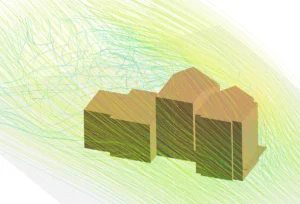
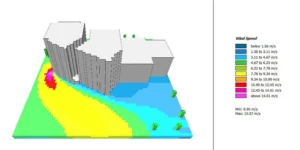

CFD analysis evaluated wind flow around a tower-building complex, identifying corner acceleration, channelling between buildings and wake zones that affect pedestrian wind comfort and the use of outdoor spaces.
Sector
Building and construction
Client
Architecture and engineering consultancy
Flow type
External atmospheric wind flow
Project Snapshot
Challenge
Tall buildings deflect approaching wind down their façades and around corners, creating accelerated flow at ground level, channelling between neighbouring towers and large wake regions. These effects determine whether entrances, walkways and outdoor areas remain comfortable and safe, and they are difficult to predict without simulation.
Approach
A 3D building-scale CFD model with an atmospheric boundary-layer inlet profile resolved wind interaction with the towers and the surrounding domain. Velocity and pressure were evaluated at pedestrian level and on the façades to locate high-wind and sheltered zones.
Key Findings
- Downwash from the tall windward façades produced the strongest ground-level wind speeds at exposed building corners.
- Narrow gaps between towers channelled and accelerated the flow, making these passages the most critical areas for pedestrian comfort.
- Leeward wake zones were sheltered but showed recirculating, gusty flow, which indicated where canopies, podium changes or landscaping would be most effective.
Deliverables
Pedestrian-level wind speed maps, façade pressure distributions, identification of high-wind zones and mitigation recommendations for the building complex.
Working on a similar problem?
Explore our CFD consulting services and engineering simulation services, or send us your building wind-flow assessment question.